


Call Us
+86-15957403707
Email Us
lydia@tree-sun.com
How Does a Tongue Scraper Work and How Should You Choose the Right One?
That white coating on your tongue? Brushing alone won't remove it—this is the first thing most people realize when they try a tongue scraper for the first time. The tongue's surface is covered with tiny papillae, creating a rough texture that easily traps bacteria, food debris, and shed cells, forming what we call "tongue coating." Regular brushing and mouthwash simply can't reach these "dead zones."
Why Use a Tongue Scraper? It's Not Just About Fresh Breath
The benefits of tongue scraping fall into three main categories:
① Reduces Bad Breath (the most immediate payoff)
The volatile sulfur compounds that cause oral malodor are primarily produced by bacteria breaking down food debris on the tongue surface. Studies show that cleaning your tongue with a scraper reduces odor-causing compounds by up to 30% more than using a toothbrush with a tongue cleaner. A 2018 study on gingivitis patients also confirmed that oral care routines incorporating tongue scraping significantly improved halitosis scores and reduced tongue coating thickness.
② Enhances Taste Sensitivity
A thick coating on the tongue can cover taste buds and dull your sense of taste. After scraping off this "layer," many people report that "food tastes better"—this isn't psychological; it's because the taste buds are no longer blocked.
③ Lowers Risk of Oral Diseases
Tongue-surface bacteria don't just cause bad breath—they can also contribute to plaque formation and gum inflammation. Regular tongue scraping helps control harmful oral bacteria and may reduce the risk of cavities and periodontal disease.
⚠️ An Important Balance: Not all bacteria at the back of the tongue are "bad." Some strains help convert compounds from leafy greens into nitric oxide, which supports healthy blood pressure. Over-aggressive scraping or overusing antibacterial mouthwash can disrupt this delicate ecosystem. So remember: gentle and moderate is the golden rule.
Tongue Scraper vs. Toothbrush Tongue Cleaner: Efficiency Comparison
| Comparison | Tongue Scraper | Toothbrush (brushing tongue) |
|---|---|---|
| Mechanism | "Scrapes" – the edge removes the entire biofilm in one go | "Brushes" – bristles create friction, more likely to spread bacteria than remove them |
| Efficiency | Removes more material per stroke; 3–4 passes clean the whole tongue | Requires 5–10 passes; hard to reach the back of the tongue |
| Gag Reflex | U-shape conforms to tongue contour; less foreign-body sensation | Bristles stimulate the soft palate; more likely to trigger gagging |
| Recommendation | ⭐⭐⭐⭐⭐ Highly recommended | ⭐⭐ Temporary fallback option |
Think of it this way: brushing is like wiping a countertop with a rag (spreading debris around), while scraping is like using a squeegee (collecting and removing it completely).
How to Choose a Tongue Scraper? Material + Shape Comparison Table
The core differences among tongue scrapers come down to material and shape, which directly affect user experience and lifespan.
| Material | Advantages | Disadvantages | Best For | Replacement Cycle |
|---|---|---|---|---|
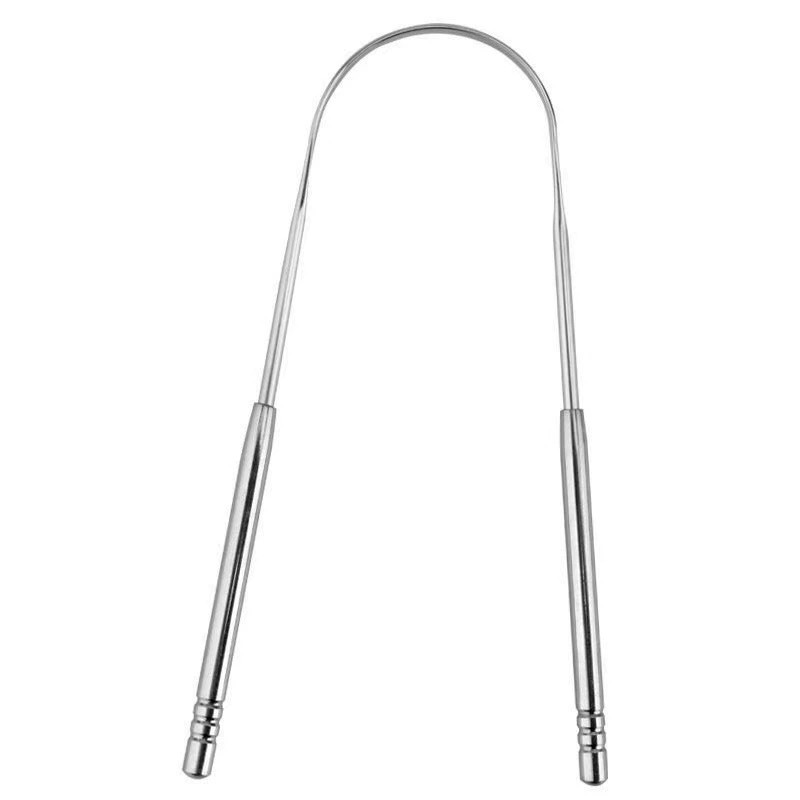
| Stainless Steel (medical grade) | Most durable, easy to sterilize, resists bacterial buildup, highly efficient | Stiffer feel; may take some getting used to | Most users seeking longevity and best value | Several years (can be boiled for sterilization) |
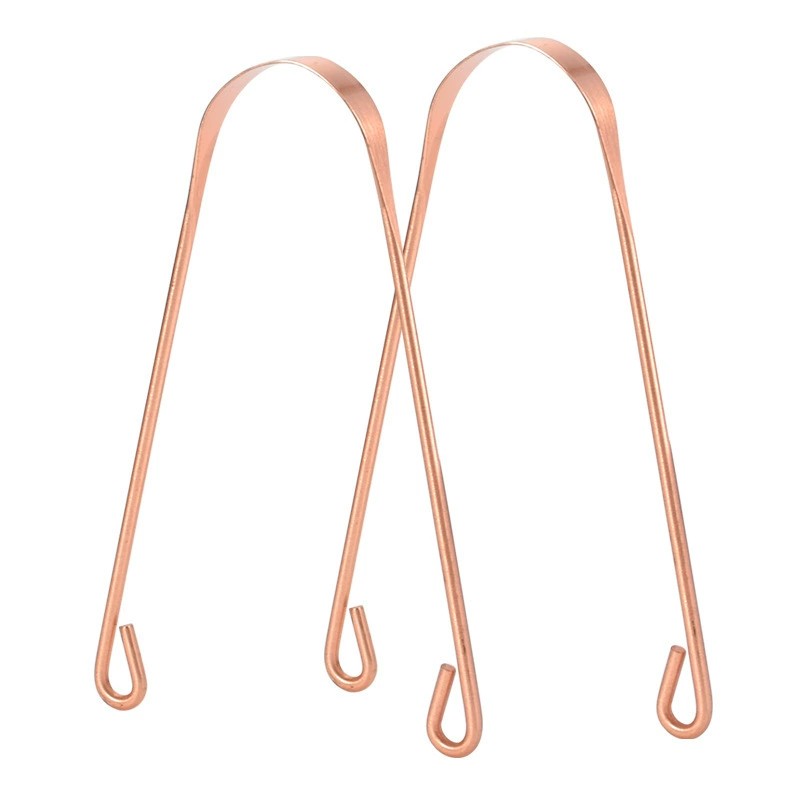
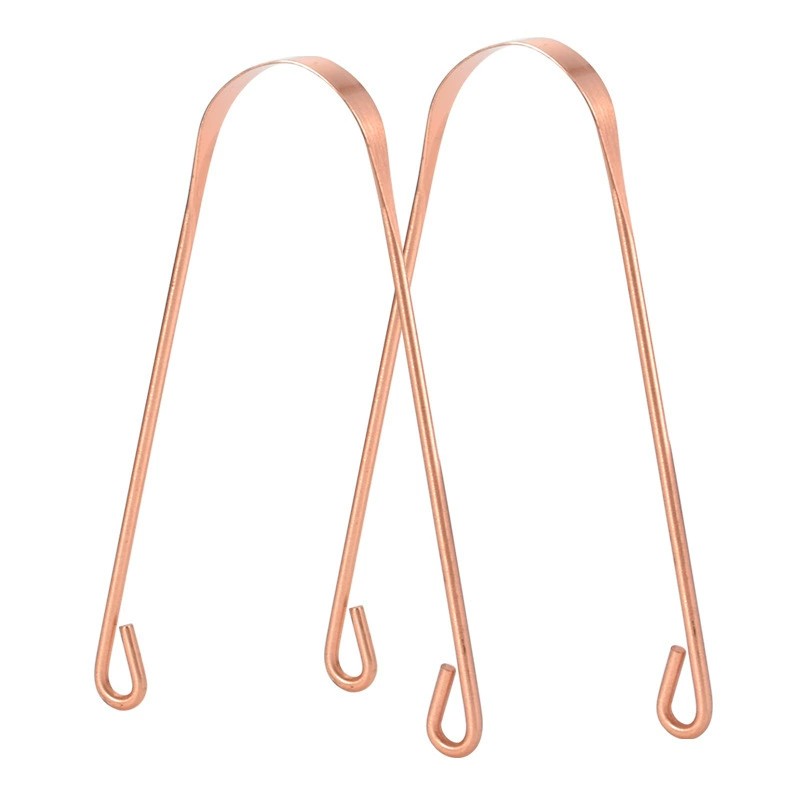
| Copper | Naturally antimicrobial ("contact killing" effect); traditional Ayurvedic choice | Higher price; needs to be kept dry to prevent oxidation | Those who prefer natural/antimicrobial materials | Several years |
| Plastic/Silicone | Soft, gentle, won't injure tongue, inexpensive | Micro-scratches can harbor bacteria; less durable | Beginners, sensitive tongues, children | 1–3 months |
| Bamboo/Biodegradable | Eco-friendly | Requires more careful cleaning and maintenance | Environmentally conscious users | Varies by product |
Shape recommendation: Choose U‑shaped or curved designs that cover the full width of the tongue in one pass and conform to the tongue's natural arc for more efficient cleaning. Single-edge curved models create less gag reflex when reaching the back of the tongue—ideal for advanced users.
Step‑by‑Step Instructions
Mastering the right technique matters more than buying the most expensive tool.
-
Timing: Use it after brushing—your tongue is already moistened and softened, making scraping more effective.
-
Extend: Stick out your tongue and look in the mirror.
-
Position: Place the scraper at the furthest back point of your tongue (without triggering a strong gag reflex).
-
Scrape: Apply gentle but steady pressure, and pull the scraper from back to front in one slow, continuous motion. Do not scrape back and forth.
-
Rinse: After each scrape, rinse off the white residue under running water.
-
Repeat: Repeat 3–5 times, covering the center, left side, and right side of the tongue, until no visible white coating comes off.
-
Finish: Rinse your mouth thoroughly, wash the scraper, dry it, and store it in a ventilated area.
What if I gag? Start from the middle of the tongue, get used to the sensation, then gradually work your way back. Exhaling (breathing through your nose) can also help suppress the gag reflex.
Frequency and Maintenance
| Item | Recommendation |
|---|---|
| Frequency | Once daily is sufficient (morning is best) |
| Over-cleaning Risk | May injure papillae or disrupt the microbiome; not recommended multiple times a day |
| Tool Cleaning | Rinse with water after each use; occasionally wash with mild soap. Metal models can be sterilized by boiling from time to time |
| Replacement Reminder | Plastic models: replace every 3 months; metal models: can last years (check edges for roughness) |
Who Should Get One?
-
Those who struggle with morning bad breath—this is one of the most cost-effective solutions out there.
-
Those with noticeably thick, white, or yellowish tongue coating.
-
Anyone looking to upgrade their oral care routine—low cost, high reward.
A tongue scraper is not a "gimmick." It addresses the "blind spot" that toothbrushes and floss simply can't reach. Choose the right material, master the technique, and stick with it for a week—you'll clearly notice the difference in oral freshness.
Getting Started Recommendation
If you're a first-time user, a stainless steel U‑shaped tongue scraper is the most reliable and efficient choice. If your tongue is particularly sensitive, a silicone model is a gentler alternative.
Recommended: NINGBO TINGSHENG BAMBOO & WOOD CO., LTD – Stainless Steel Tongue Scraper.
Send Inquiry



X
We use cookies to offer you a better browsing experience, analyze site traffic and personalize content. By using this site, you agree to our use of cookies.
Privacy Policy
News
 Bamboo Toothbrush: A Dual Choice for Environmental Protection and Health2025/03/08
With the increasing global awareness of environmental protection, bamboo toothbrushes have gradually gained popularity among consumers as a sustainable oral care product.
 How Does a Tongue Scraper Work and How Should You Choose the Right One?2026/07/29
That white coating on your tongue? Brushing alone won't remove it—this is the first thing most people realize when they try a tongue scraper for the first time. The tongue's surface is covered with tiny papillae, creating a rough texture that easily traps bacteria, food debris, and shed cells, formi......